Naming and destiny
At the ìkómọjádé — naming ceremony on the eighth day — a child receives names that declare hope, circumstance, and lineage. Orúkọ rọ́ni — a name follows a person. Families choose words they are willing to see fulfilled.
04 · The Lineage
Ìdílé — The House That Holds You
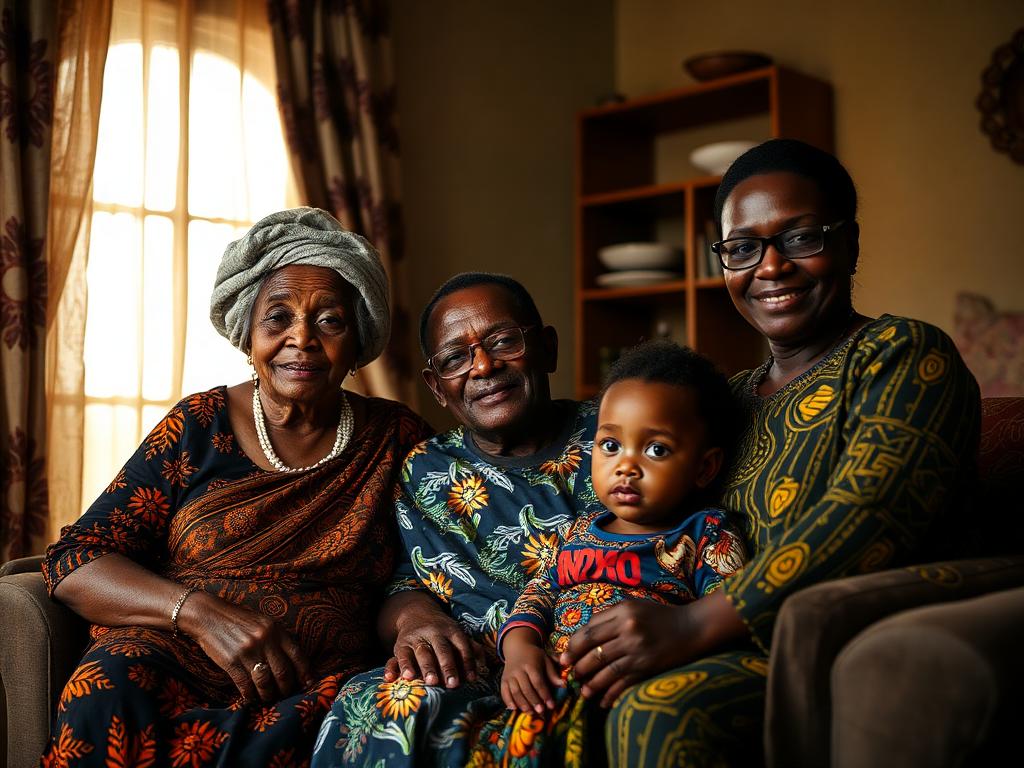
The Yorùbá ìdílé stretches far beyond parents and children. It is grandparents, cousins, age-mates, and the ancestors whose names are given again to newborns. To belong to a family is to belong to a continuing story.
At the ìkómọjádé — naming ceremony on the eighth day — a child receives names that declare hope, circumstance, and lineage. Orúkọ rọ́ni — a name follows a person. Families choose words they are willing to see fulfilled.
The highest praise a Yorùbá family can earn is that its children are ọmọlúàbí: respectful, truthful, hardworking, courageous, and humble. Training is shared — aunties, uncles, and neighbours all correct a child, because a child belongs to the community.
Elders hold proverbs, remedies, family history, and the memory of past disputes. Consulting them is not weakness; it is how a household avoids repeating an old wound. Àgbà kì í wà lọ́jà kí orí ọmọ tuntun wọ́ — an elder present will not let a child's head go crooked.
Family is measured in showing up: at illnesses, at burials, at school fees, at festivals. Money without presence is not care, and presence without provision is not enough.
Òwe · Proverb
Ilé ni à ń wò kí á tó sọ ọmọ lórúkọ.
We look at the household before we name the child.