← Core Pillars

02 · Intentionality

Courtship

Ìfẹ́ Àṣàrò — Love with Deliberation

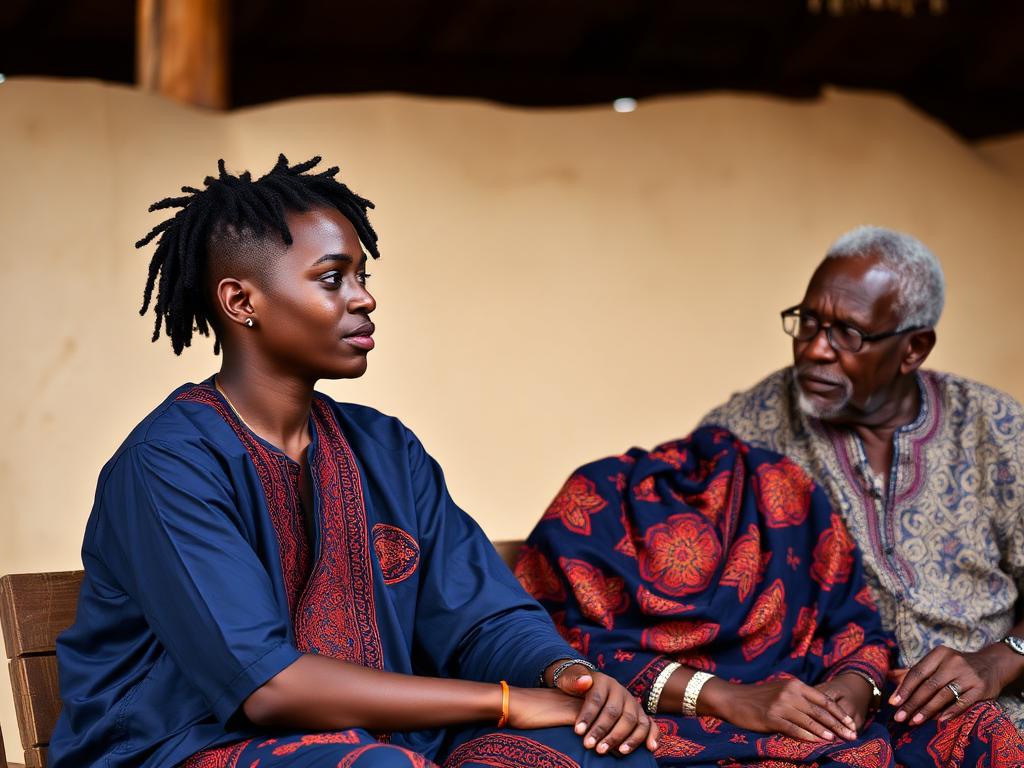
A young Black Yoruba couple in courtship seated near an elder

Courtship in Yorùbá culture is not casual dating. It is a declared intention, made known to families, guided by elders, and measured against the question: can these two build a household that honours both lineages?

Declaring intention

The suitor makes purpose plain. Traditionally an ìṣíjú — an opening visit — is made through a respected intermediary, and the family is told openly what is being sought. Ambiguity is considered disrespectful, because a person's time and reputation are valuable.

Elders and the alárinà

The alárinà (go-between) carried messages, asked hard questions, and checked family history. Today mentors and community elders play that role: asking about debts, health, temperament, previous unions, and readiness — questions love alone will not ask.

Consultation and alignment

Many families consult Ifá or seek spiritual counsel before consent, asking whether the union is aligned. Whatever your practice, the principle stands: pause, seek wisdom outside your own desire, and listen to what you are told even when it is inconvenient.

Restraint as respect

Courtship guards the dignity of both people. Boundaries, honesty about finances, and patience with time are not restrictions — they are the proof that the affection is for the person, not the moment.

Òwe · Proverb

Bí a bá ń fẹ́ ẹni, a kì í fi ojú ẹni wò ó nìkan.

When you desire someone, you do not look with your eyes alone.

Practise it

  • 01State your intention clearly within the first month.
  • 02Introduce a mentor or elder into the process early.
  • 03Discuss money, children, faith, and location before emotion decides.
  • 04Set boundaries together and keep them without being reminded.

Continue through the pillars

Home
Matches
Sparks
Talk
Feed
Me